
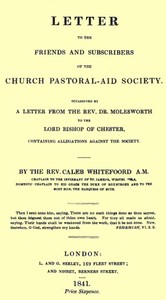
Letter to the Friends and Subscribers of the Church Pastoral-Aid Society
Okay, let's set the scene. It's 19th-century England, and the Church Pastoral-Aid Society is a big deal. Its job is to raise money and send assistant clergy to parishes that can't afford them, especially in poor or crowded areas. Reverend Caleb Whitefoord isn't just a subscriber; he's been on the committee, deep in the trenches of making it work.
The Story
This book is that letter. Whitefoord pens it directly to the people who fund and support the Society. He starts by saying he believes in the mission more than ever. But then he drops the bomb: he's resigning from the committee, and he wants everyone to know why. The rest of the letter is his evidence. He lays out a case that the Society's leaders have lost their way. He argues they're wasting money on fancy offices and administrative bloat instead of getting help to the parishes that desperately need it. He points to specific decisions and what he sees as a growing disconnect between the committee's comfortable meetings and the hard work in the field. It's a detailed, point-by-point indictment from an insider who can't stay silent anymore.
Why You Should Read It
What grabbed me wasn't the 19th-century church politics. It was Whitefoord's voice. You can feel his frustration and his genuine heart for the work. This isn't a cynical takedown; it's a wounded plea from someone who cares too much to let things slide. It makes you think about how any organization—a charity, a club, a company—can slowly lose sight of its original purpose. The questions he raises about efficiency, transparency, and staying true to a mission are timeless. Reading it, you're a fly on the wall for a very personal, very high-stakes moment of conscience.
Final Verdict
This is a niche read, but a fascinating one. It's perfect for history buffs who want to see beyond the dates and battles to the human conflicts that shaped institutions. If you're interested in sociology, ethics, or nonprofit work, you'll find Whitefoord's dilemmas eerily familiar. It's also a great, short primary source for anyone curious about Victorian society and religion. Just don't expect a novel with a plot—the drama here is all real, raw, and captured in one fiery letter from a man who decided to speak up.
Kimberly Smith
5 months agoSimply put, the flow of the text seems very fluid. Exactly what I needed.







Matthew Moore
8 months agoPerfect.