
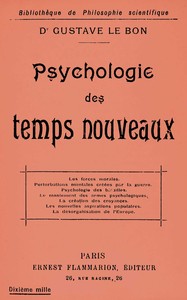
Psychologie des temps nouveaux by Gustave Le Bon
Gustave Le Bon's Psychologie des temps nouveaux isn't a novel with a plot in the traditional sense. Instead, it's an investigation. Think of it as a doctor's report on the 'mental health' of modern society at the turn of the 20th century. Le Bon watches the world transform through industrialization, the rise of mass democracy, and faster communication. He sees these forces not just changing how people live, but how they think.
The Story
The 'story' here is the birth of the mass mind. Le Bon argues that the old world, built on tradition and individual reason, is crumbling. In its place comes a 'new era' dominated by crowds and collective emotions. He walks us through how ideas spread in this new environment—not through careful debate, but through images, repetition, and contagious feeling. He looks at politics, religion, and even education, showing how institutions adapt (or fail to adapt) to this psychological shift. The central conflict is between the individual's critical mind and the overpowering, often irrational, will of the group.
Why You Should Read It
Reading Le Bon is a strange experience. On one hand, you have to constantly remind yourself this was written over 120 years ago, because so much of it feels like it's describing Twitter storms or viral TikTok trends. His core insight—that a group develops a psychology separate from its individual members—is powerful. It helps explain everything from fashion fads to nationalism. On the other hand, parts of this book are a tough pill to swallow. His views are steeped in the prejudices of his time, including racist and sexist theories. I think it's worth reading not to agree with him, but to see where many modern ideas about crowd psychology and propaganda got their start. It’s like reading the original source code for a lot of our current social anxieties.
Final Verdict
This book is perfect for curious minds who love connecting historical ideas to the present day. It's great for anyone interested in psychology, sociology, or politics. If you enjoy books like Extraordinary Popular Delusions and the Madness of Crowds or modern works on behavioral science, you'll find Le Bon a fascinating (if problematic) founding father. Approach it as a historical document—a brilliant, flawed, and eerily prescient analysis of how modern life messes with our heads. Keep your critical thinking hat on, and you'll get a lot out of it.
James Lopez
1 year agoHaving read this twice, it manages to explain difficult concepts in plain English. Absolutely essential reading.
Elizabeth Jackson
1 year agoCompatible with my e-reader, thanks.
Kimberly Thomas
1 year agoRecommended.
Logan Martinez
9 months agoRecommended.







Donald Hill
11 months agoHonestly, the pacing is just right, keeping you engaged. I learned so much from this.