
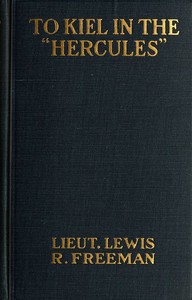
To Kiel in the 'Hercules' by Lewis R. Freeman
Lewis R. Freeman's To Kiel in the 'Hercules' is a true story that often feels too strange to be true. Published in 1919, it's Freeman's firsthand account of a secretive and incredibly risky merchant voyage at the height of the First World War.
The Story
Freeman was the captain of the SS Hercules, a big American freighter. In 1915, while the war is tearing Europe apart, he gets orders that seem almost suicidal: take his ship, loaded with a mysterious cargo of cotton and copper, and sail directly into the German Empire's main naval base at Kiel. America is neutral, but the British blockade and German U-boats have turned the Atlantic and North Sea into a deadly maze. The book follows the Hercules on this tense journey. It's a log of navigating minefields, being stopped and searched by warships from both sides, and dealing with the constant, low-grade panic of not knowing who will fire first. The climax is their arrival in Kiel itself, where they're treated with deep suspicion by the Germans, who can't believe a neutral ship would just sail into the lion's den.
Why You Should Read It
This isn't a history of generals and battle lines. It's the view from the bridge of a civilian ship, and that's what makes it so compelling. Freeman writes with a dry, observant wit. You feel the exhaustion of the crew, the odd moments of humor with enemy sailors during inspections, and the surreal experience of being in a hostile port where you're both a guest and a potential spy. The tension isn't from epic fights, but from the drip-drip-drip of uncertainty. Every flag raised, every course correction, could be misinterpreted. It’s a masterclass in quiet, sustained suspense, and a fascinating look at how ordinary work and global conflict violently collided.
Final Verdict
Perfect for history buffs who want a ground-level (or rather, sea-level) view of WWI, or for anyone who loves real-life adventure tales. If you enjoyed the maritime suspense of The Cruel Sea or the personal-journal style of a great explorer's diary, you'll be glued to Freeman's account. It’s a unique and gripping slice of history that you probably never learned about in school.
George Williams
1 year agoUsed this for my thesis, incredibly useful.
Susan King
1 year agoThis book was worth my time since the clarity of the writing makes this accessible. A true masterpiece.
Donna Davis
1 year agoVery interesting perspective.
Charles Walker
1 year agoI was skeptical at first, but the emotional weight of the story is balanced perfectly. Thanks for sharing this review.








Emily Jones
2 years agoBased on the summary, I decided to read it and the atmosphere created is totally immersive. Worth every second.