
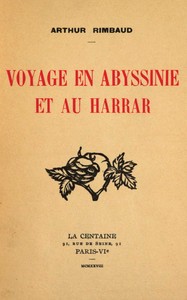
Voyage en Abyssinie et au Harrar by Arthur Rimbaud
Put aside everything you expect from a book by Arthur Rimbaud. This isn't a collection of symbolic, revolutionary verse. It's a travelogue, a ledger, and a survival guide written by a man who had completely reinvented himself.
The Story
The book follows Rimbaud's years in Northeast Africa, roughly from 1880 to 1891. After abandoning poetry in his early twenties, he drifted through various jobs before landing in Aden and then pushing into the interior of what is now Ethiopia. The 'story' is his life: his efforts to set up trade routes for coffee, ivory, and (most notoriously) firearms. We travel with him from the port cities to the royal court of King Menelik II in Shewa. He describes grueling caravan journeys, harsh landscapes, complex local politics, and the daily grind of commerce. There's no traditional narrative arc. Instead, it's a raw, on-the-ground view of a European trying, and often struggling, to navigate a world entirely foreign to him, driven by a desperate hunger for wealth and purpose.
Why You Should Read It
This book fascinates because it shatters the myth. The fiery, visionary teenager is gone, replaced by a pragmatic, often cynical, and physically tough merchant. Reading his detailed notes on prices, routes, and tribal customs is strangely compelling. You see a brilliant mind applied not to dreams, but to logistics. The contrast is everything. You catch glimpses of the poet's eye in his descriptions of landscapes—stark, clear, and brutally beautiful—but the romanticism is stripped away. It's a portrait of self-exile. He wasn't searching for inspiration; he was running from it, seeking something concrete in a world of dust, trade, and real danger. It makes you wonder if this harsh reality was, for him, more honest than the literary salons he left behind.
Final Verdict
This is not for everyone. If you want classic Rimbaud poetry, look elsewhere. But if you are captivated by enigmatic historical figures, this is a must-read. It's perfect for readers who love biographical puzzles, armchair explorers, and anyone interested in the messy collision of Europe and Africa in the colonial era. Think of it as the ultimate postscript to a legendary career. It's the record of a different kind of journey—one of disappearance and reinvention—and it's arguably just as astonishing as his poems.
Elijah Jackson
1 year agoI had low expectations initially, however the depth of research presented here is truly commendable. Worth every second.
Joseph Lewis
4 months agoI have to admit, the author's voice is distinct and makes complex topics easy to digest. Highly recommended.
Linda Nguyen
1 year agoFrom the very first page, the clarity of the writing makes this accessible. Highly recommended.
Susan Harris
1 year agoIf you enjoy this genre, the atmosphere created is totally immersive. I will read more from this author.




Kevin Allen
1 year agoIf you enjoy this genre, the clarity of the writing makes this accessible. Truly inspiring.