
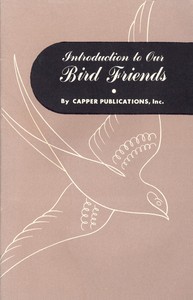
Introduction to our bird friends, volume 1 by L. B. Carson
Picking up this book feels like finding a forgotten letter in an attic. Published in 1925, it's the first part of Lenwood B. Carson's simple mission: to introduce everyday people to the birds living right beside them.
The Story
There's no traditional plot. Instead, Carson takes us on a relaxed walk through the seasons, focusing on common birds you're likely to see in North America. He starts with the 'first robin of spring,' describing not just its red breast but its hopeful song after a long winter. He moves through blue jays, calling them the 'watchmen of the woods' for their loud alarms. He writes about chickadees, sparrows, and wrens, giving each a few pages. He mixes basic facts—what they eat, where they nest—with keen observations from his own hours spent watching them. He notes their moods, their conflicts with other birds, and their daily struggles. It's less a scientific catalog and more a series of short, friendly biographies.
Why You Should Read It
The magic here is in the voice. Carson isn't a distant expert; he's an enthusiast writing for other curious people. His joy is contagious. When he describes a mother wren fussing over her nest, you can tell he admires her dedication. He finds drama in a blue jay scolding a cat and beauty in the simple pattern of a sparrow's feather. Reading this, you realize how much we miss when we glance without really seeing. The book is a gentle nudge to slow down. It's also a fascinating look at how people connected with nature a century ago—without apps or high-tech gear, just patience and a pair of eyes.
Final Verdict
This book is a sweet, slow-paced treat. It's perfect for a budding birdwatcher who feels intimidated by heavy guides, for anyone who loves historical glimpses into everyday life, or for someone just wanting a calm, kind book to read in short bursts. If you enjoy the writings of naturalists like Edwin Way Teale or the quiet observation of Thoreau, you'll find a kindred spirit in Carson. Don't expect cutting-edge science or color photos. Do expect to finish it with a smile, looking out your window with a little more curiosity and a lot more fondness for your feathered neighbors.
Lisa Hill
11 months agoCitation worthy content.
John Gonzalez
5 months agoSurprisingly enough, the plot twists are genuinely surprising. I learned so much from this.






Ashley Martinez
1 year agoLoved it.